
Travelling With a Dog in Nigeria: Preparation, Water, Restraints and Safety
Written by Dr. Mamman Job
Registered Veterinary Surgeon | Veterinary Council of Nigeria
View author profile
Travelling with a dog in Nigeria can be a rewarding experience, whether you are relocating to another state, visiting family, going on holiday or taking your dog to a veterinary appointment. However, a journey that seems straightforward for a person can present several challenges for an animal.
Long distances, traffic delays, hot weather, unfamiliar surroundings and limited opportunities to stop can make road travel uncomfortable or unsafe for dogs. A dog that is not properly restrained may also distract the driver or suffer injuries if the vehicle brakes suddenly.
The best way to protect your dog is to plan the journey around its health, comfort and safety. This includes preparing the necessary supplies, carrying enough drinking water, choosing an appropriate restraint, planning safe breaks and knowing what to do if your dog becomes unwell.
This guide explains how to prepare for domestic travel with a dog in Nigeria, particularly by private car, and what owners should consider before using commercial transport or travelling by air.
Is Your Dog Ready to Travel?
Before planning the route, consider whether your dog is physically and behaviourally ready for the journey.
A healthy adult dog that is already comfortable with car rides may cope well with a long trip when properly prepared. A young puppy, elderly dog, dog recovering from illness or animal with an existing medical condition may need additional consideration.
Arrange a Veterinary Check When Necessary
A pre-travel veterinary examination is particularly useful when:
- Your dog has a chronic medical condition.
- It is recovering from surgery, injury or illness.
- It has previously experienced severe motion sickness.
- It has breathing difficulties or a short-nosed facial structure.
- It is very young, elderly or otherwise medically vulnerable.
- The journey will be unusually long or involve air transport.
Ask your veterinarian whether your dog’s vaccinations and preventive healthcare are up to date. Rabies vaccination is particularly important in Nigeria because rabies is a serious public health concern.
Keep your dog’s vaccination records and relevant medical information available during the journey. These records can also help a veterinarian provide appropriate care if an emergency occurs.
A healthy appearance alone does not always establish that an animal is fit for a long journey. If you are uncertain, seek veterinary advice before departure.
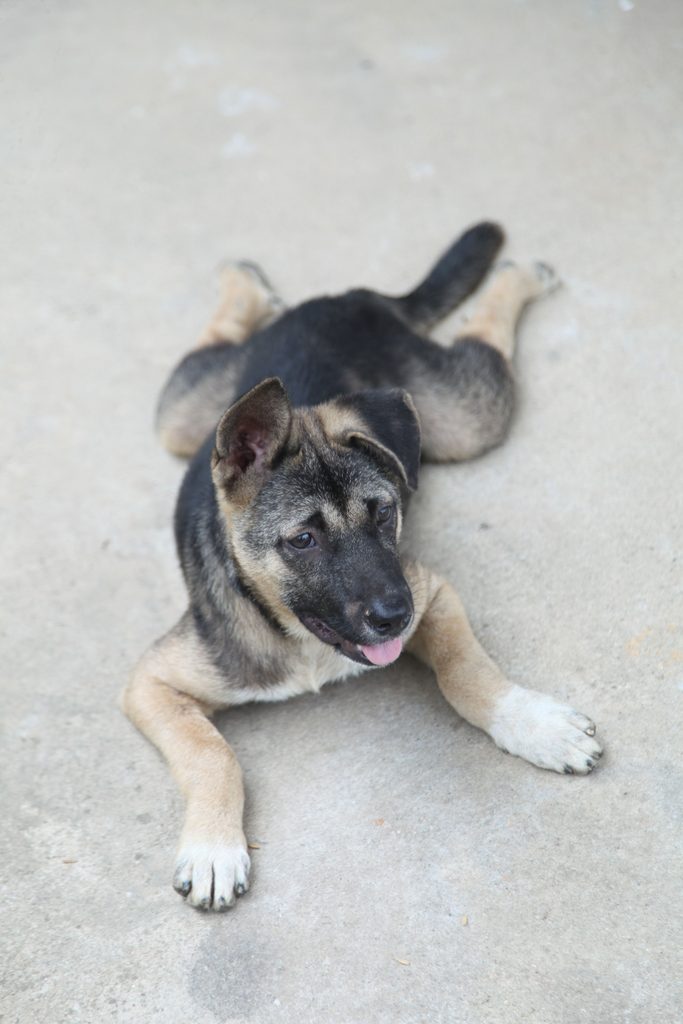
Get Your Dog Used to the Vehicle
Do not make a long-distance journey your dog’s first experience of travelling in a car.
Start by allowing it to investigate the parked vehicle while supervised. Introduce its travel crate or harness gradually, using praise and rewards when it remains calm.
When the dog is comfortable, begin with short drives around your neighbourhood. Gradually increase the journey time as it becomes more confident.
This preparation can help you identify problems such as excessive drooling, trembling, restlessness, barking or vomiting before you are far from home.
Preparing for Road Travel in Nigeria
Domestic road journeys can involve unpredictable traffic, roadworks, security stops, weather changes and delays. A journey expected to take a few hours may take considerably longer.
For this reason, avoid planning around the shortest possible travel time. Prepare for the possibility that you may spend additional hours on the road.
Choose a Suitable Travel Time
Where practical, plan your journey to avoid the hottest part of the day, particularly when travelling with a dog that struggles with heat.
Early departures may reduce exposure to intense afternoon temperatures, but consider visibility, road safety, traffic conditions and the driver’s ability to travel safely.
Do not rush or drive while tired simply to avoid the heat. A safe departure time is one that allows both the driver and dog to travel comfortably.
Plan Your Route and Stopping Points
Before leaving, identify suitable places where you can safely stop, offer water and allow your dog to relieve itself.
Avoid assuming that every fuel station, roadside restaurant or public stop will have a safe area for a dog.
Look for stopping locations that:
- Are away from moving traffic.
- Have a secure area for handling the dog.
- Provide enough room to exit the vehicle safely.
- Do not expose the dog to aggressive or unfamiliar animals.
- Allow you to return to the vehicle without leaving the dog unattended.
If your route includes areas with limited services, carry enough water, food and other essentials to manage unexpected delays.
Use a Proper Restraint to Secure Your Dog
One of the most important parts of travelling with a dog is ensuring that it cannot move freely around the vehicle.
Even a calm dog can become excited by another animal, a passing motorcycle or an unfamiliar sound. If it moves onto the driver’s lap, blocks the controls or interferes with the driver’s attention, everyone in the vehicle may be at risk.
An unrestrained dog may also be thrown against seats or other surfaces during sudden braking or a collision.
Option 1: A Suitable Travel Harness
A dog travel harness designed for vehicle use can help keep a dog secure in the rear passenger area.
Choose a properly fitted harness that:
- Fits securely without restricting normal breathing.
- Does not put pressure on the dog’s neck.
- Attaches to a suitable vehicle restraint system.
- Allows the dog to sit or lie down comfortably.
- Is appropriate for the dog’s size and weight.
A regular walking harness is not automatically designed or tested for crash protection. Where possible, choose a crash-tested vehicle restraint and follow its manufacturer’s installation instructions.
Avoid attaching a seat-belt restraint directly to an ordinary collar. Sudden movement can place dangerous pressure on the dog’s neck.
Option 2: A Secure Travel Crate
A suitable travel crate can be a practical option, especially for dogs that are already comfortable resting in one.
The crate should allow the dog to:
- Stand naturally.
- Sit comfortably.
- Turn around.
- Lie down in a natural position.
It should also have adequate ventilation, secure doors and enough structural strength for the intended journey.
Place the crate in a suitable position and secure it so that it cannot slide or tip during braking or turning. Follow the crate and vehicle manufacturers’ safety instructions.
A loose crate can become a hazard during an accident. Do not assume that simply placing it on a seat makes it safe.
Where Should the Dog Sit?
For most private-car journeys, the rear passenger area is a more appropriate location than the front passenger seat.
An active front airbag can seriously injure a dog during deployment. Keep the dog away from the driver’s area and do not allow it to sit on someone’s lap.
If using a crate, follow reliable vehicle-specific guidance for its placement. Cornell University’s canine travel guidance notes that when a crash-tested restraint is unavailable, a carrier secured on the floor behind a front seat may provide a safer alternative to leaving it loose on a seat.
Never transport a dog loose in the open bed of a pickup truck. A dog can fall, jump out or be injured during sudden movement.
Water and Hydration During the Journey
Water is one of the most important supplies to carry when travelling with a dog in Nigeria.
Warm weather, physical activity, panting and extended travel can increase the need for water. Traffic delays can also make it difficult to predict when the next safe stop will be available.
Carry More Water Than You Expect to Need
Bring enough clean drinking water for the planned journey, with an additional supply for delays.
A practical travel kit should include:
- Bottled drinking water or clean water from home.
- A portable water bowl.
- A leak-resistant water container.
- A separate container for storing unused water.
- A towel for cleaning spills.
Do not rely entirely on finding water along the route. The availability and cleanliness of water at roadside stops may vary.
Offer Water During Safe Stops
Allow your dog to drink during appropriate breaks. Offer water calmly and give it time to drink without rushing.
Some dogs prefer smaller, more frequent opportunities to drink rather than drinking a large amount at once.
Do not force water into your dog’s mouth or pour it down its throat. This can cause choking or aspiration.
Water should also be available at the destination. Once you arrive, allow your dog to settle in a cool, comfortable area and continue monitoring its drinking behaviour.
Do Not Restrict Water to Prevent Toilet Stops
Withholding water for long periods is not a safe way to avoid stopping during a road trip.
Dogs need adequate access to drinking water, particularly in warm conditions. Plan suitable toilet breaks instead of deliberately dehydrating the animal.
Protecting Your Dog From Heat During Travel
Heat is a significant consideration when travelling with dogs in Nigeria. A vehicle can become dangerously hot when parked, even if the windows are partly open.
Dogs do not cool themselves in the same way humans do. Panting is an important part of their cooling process, but it may not be enough when the surrounding environment is excessively hot.
Keep the Vehicle Properly Ventilated
During the journey, maintain a comfortable temperature inside the vehicle.
If using air conditioning, check that cool air reaches the area where the dog is secured. Do not assume that the front of the vehicle is cool enough for a dog sitting in the rear.
Avoid placing a crate where direct sunlight can heat it excessively.
If the vehicle develops an air-conditioning problem or becomes uncomfortably hot, stop somewhere safe and assess the situation rather than continuing regardless.
Never Leave Your Dog Alone in a Parked Car
This rule is extremely important.
Do not leave your dog inside a parked vehicle while you buy food, purchase fuel, use a toilet or attend to another errand.
Partly opening the windows does not make a parked vehicle safe. Heat can build up rapidly, and a dog may develop life-threatening heatstroke.
If you need to stop somewhere that does not allow dogs, make alternative arrangements before the journey.
Recognise Possible Heatstroke
Heatstroke is a medical emergency that can become life-threatening.
Warning signs may include:
- Heavy or unusually rapid panting.
- Excessive drooling.
- Weakness or difficulty standing.
- Vomiting or diarrhoea.
- Confusion or unusual behaviour.
- Collapse or seizures.
If you suspect heatstroke, move the dog away from the hot environment and begin cooling it with cool water while arranging immediate veterinary care.
Use cool, not ice-cold, water. Do not delay veterinary attention to see whether the dog improves on its own. Call the veterinary clinic while travelling there if possible.
Dogs with short noses, such as Bulldogs and Pugs, may be particularly vulnerable to breathing and heat-related difficulties. They require extra care when planning travel.
Feeding Your Dog Before and During the Journey
Feeding arrangements can influence how comfortable a dog feels during a road trip.
Some dogs experience motion sickness, especially when travelling for extended periods. A large meal immediately before departure may increase the likelihood of nausea or vomiting.
Feed Before Departure
For a healthy dog prone to motion sickness, your veterinarian may recommend adjusting meal timing before travel.
A commonly suggested approach is to avoid a large meal immediately before departure and allow a few hours between feeding and travelling. The appropriate timing can vary according to the dog’s age, health and individual needs.
Puppies and dogs with medical conditions may need different feeding arrangements. Do not withhold food for extended periods without veterinary advice.
Carry the Dog’s Usual Food
Pack enough of your dog’s regular food for the journey and the first part of your stay.
Avoid introducing an unfamiliar diet simply because you are travelling. Sudden dietary changes may cause digestive upset.
If the journey is long, plan feeding at a safe stopping point rather than feeding the dog while the vehicle is moving.
Recognise Motion Sickness
Possible signs include:
- Drooling more than usual.
- Repeated lip licking.
- Restlessness.
- Whining.
- Vomiting.
- Refusing to settle.
These signs can also be associated with anxiety or other health problems. If your dog repeatedly becomes sick during car journeys, consult a veterinarian before the next trip.
Never give human motion-sickness tablets, sedatives or other medication without veterinary guidance.
How Often Should You Stop During a Long Journey?
There is no single break schedule that suits every dog. Age, health, temperament, weather, journey length and previous travel experience all matter.
For a longer road trip, planning a safe stop approximately every two hours is a useful starting point. Some dogs will need breaks sooner, while others may comfortably manage a different schedule.
Use breaks to:
- Offer fresh drinking water.
- Allow the dog to urinate or defecate.
- Give it an opportunity to stretch and walk briefly.
- Check that the harness or crate remains comfortable.
- Assess whether the dog appears too hot, anxious or unwell.
Keep Your Dog on a Leash During Stops
Even a dog with excellent recall may become frightened or distracted in an unfamiliar environment.
Keep it on a properly fitted leash whenever it is outside the vehicle.
Before opening the door, make sure the dog is secured with its leash or harness. Do not allow it to jump out into a busy road or unfamiliar parking area.
Avoid allowing it to approach unknown dogs, eat roadside waste or drink from dirty puddles.
What to Pack When Travelling With a Dog in Nigeria
Preparing a travel bag before departure can prevent unnecessary stress.
Essential Supplies
| Item | Why it matters |
|---|---|
| Clean drinking water | Provides water during delays and stops |
| Portable water bowl | Makes drinking easier |
| Usual dog food | Helps maintain the normal diet |
| Food container | Keeps food clean and protected |
| Leash and collar | Helps control the dog during stops |
| Vehicle harness or secure crate | Prevents free movement in the car |
| Identification tag | Helps identify the dog if separated |
| Vaccination records | Provides useful medical information |
| Waste bags | Allows responsible waste disposal |
| Towels and cleaning supplies | Useful for spills, dirt or vomiting |
| Familiar blanket or toy | May help the dog settle |
| Regular medication | Maintains an existing treatment plan |
| Recent photograph | Helps identify the dog if it goes missing |
For a longer journey, also consider carrying a spare leash, a suitable first-aid kit and your veterinarian’s contact information.
Do not administer medication from the first-aid kit unless you have received appropriate veterinary instructions.
Travelling With a Dog on Commercial Transport in Nigeria
Not every transport company accepts animals. Some operators prohibit pets, while others may have specific conditions for accepting them.
Never assume that a dog will be allowed simply because it is inside a crate.
Before buying a ticket:
- Contact the transport company directly.
- Ask whether dogs are permitted on the particular route.
- Explain the dog’s size and whether it will travel in a crate.
- Confirm any additional charges or documentation.
- Ask where the dog will be positioned during the journey.
- Request confirmation of the arrangement before paying.
For example, Chisco Transport’s published terms and conditions prohibit pets on its coaches. This illustrates why owners should check the actual operator’s rules rather than relying on assumptions or informal assurances.
If the company does not permit animals, do not attempt to hide the dog in luggage or a passenger compartment. Choose a suitable alternative.
Where a private vehicle or dedicated pet transport service is available, assess whether the vehicle provides appropriate ventilation, secure containment, water, monitoring and planned breaks.
What About Travelling With a Dog by Air?
Air travel involves additional requirements beyond ordinary road travel.
Airlines have their own rules regarding pet acceptance, crate specifications, booking arrangements, documentation, breed restrictions and whether animals may travel in the cabin or another approved area.
Before purchasing a ticket, contact the airline and confirm its current pet policy.
For international journeys, the destination country’s animal-health requirements must also be checked. Depending on the destination, these may include:
- A valid rabies vaccination record.
- A veterinary health certificate.
- An import permit.
- Microchip identification.
- Additional tests or treatments.
- Specific timing requirements for vaccination or documentation.
Do not assume that the requirements for entering one country are the same as those for another.
For dogs travelling out of Nigeria or entering another country, consult the relevant veterinary authorities, destination government and airline well in advance.
Sedation should never be arranged casually to make air travel easier. Discuss anxiety and travel suitability with a veterinarian and follow the airline’s requirements.
Important Safety Mistakes to Avoid
A few common mistakes can put a dog’s health and safety at risk.
Allowing the Dog to Move Freely in the Car
A dog that wanders around the vehicle can distract the driver and may be injured during sudden braking.
Use an appropriate restraint or secure crate.
Allowing the Dog to Put Its Head Outside the Window
Dogs may enjoy the wind, but flying debris can injure their eyes and ears. Sudden braking or movement can also put them at risk of falling or being thrown out.
Keep the dog safely inside the vehicle.
Leaving the Dog in a Parked Vehicle
Never leave a dog unattended in a parked car, even for a short errand or when the windows are partly open.
Using an Ordinary Collar as a Seat-Belt Restraint
A collar is not a substitute for a suitable vehicle harness. Sudden movement can cause serious neck injuries.
Ignoring Signs of Illness
Repeated vomiting, difficulty breathing, severe weakness or signs of heatstroke should not be treated as normal travel discomfort.
Stop safely and seek veterinary assistance.
Giving Human Medication
Human medicines may be unsuitable or dangerous for dogs. Do not give medication for nausea, anxiety or pain without veterinary advice.
What to Do When You Arrive
Reaching your destination does not mean that your dog’s travel needs are over.
Give it time to settle and check for any signs of discomfort.
When you arrive:
- Take the dog out of the vehicle using a leash.
- Offer clean drinking water.
- Allow it to relieve itself.
- Check its paws and body for visible injuries.
- Provide a quiet place to rest.
- Offer its normal food according to its usual routine.
- Keep it away from unfamiliar animals until you understand the environment.
If the dog appears unusually weak, distressed, injured or unwell, contact a veterinarian.
Frequently Asked Questions About Travelling With a Dog in Nigeria
1. Can I travel from one Nigerian state to another with my dog?
Road travel with a dog may be possible, but you should plan around the dog’s welfare and confirm any applicable requirements with the relevant authorities or transport provider. Carry vaccination and relevant veterinary records, particularly for longer journeys.
2. Can my dog travel in the front passenger seat?
The rear passenger area is generally preferable. A dog in the front may be injured by an active airbag and can distract the driver. Use an appropriate restraint or secure crate.
3. How much water should I carry for my dog?
The amount depends on the dog’s size, health, weather and journey length. Carry enough clean water for the expected trip and an additional supply for delays. Offer it during safe stops rather than relying on roadside water sources.
4. How often should I stop when travelling with my dog?
A stop approximately every two hours is a useful starting point for many longer journeys, but individual needs vary. Puppies, elderly dogs and dogs with medical conditions may need more frequent breaks.
5. Is it safe to travel with a puppy?
Some puppies can travel safely when their health, age, vaccination status and transport arrangements are considered. However, young puppies may need more frequent feeding, toileting and rest opportunities. Ask your veterinarian whether the puppy is ready for the planned journey.
6. Can I give my dog medication to prevent car sickness?
A veterinarian may recommend appropriate medication for dogs that experience motion sickness. Do not use human medication or choose a dose yourself.
7. Can I travel with my dog in a commercial bus?
It depends on the transport company’s policy. Some operators prohibit pets, while others may consider them under specific conditions. Confirm permission directly before booking. Never hide an animal in luggage or an unsuitable compartment.
8. Is it safe to travel with a dog during hot weather?
It can be possible with appropriate planning, ventilation, water and safe stopping arrangements. However, dogs with breathing problems, short-nosed breeds and animals with existing health conditions may face increased risks. Never leave a dog alone in a parked vehicle.
9. Should I feed my dog during a long road trip?
Maintain an appropriate feeding routine, but avoid feeding a large meal while the vehicle is moving. If the dog is prone to motion sickness, ask your veterinarian about meal timing. Offer food at a safe stopping point when appropriate.
10. What documents should I carry when travelling with my dog?
For a domestic journey, carrying vaccination records, relevant medical information and your veterinarian’s contact details is sensible. International journeys may require additional documents, permits, vaccinations or tests. Check the current requirements with the relevant authorities and airline.
Final Thoughts
Travelling with a dog in Nigeria requires more than putting the animal inside a vehicle and setting off. Traffic delays, hot weather, limited stopping options and different transport policies can make proper preparation especially important.
Before departure, assess your dog’s health, introduce it to the vehicle and travel equipment, pack sufficient clean water, and choose an appropriate restraint. Plan safe breaks and keep your dog away from excessive heat throughout the journey.
Most importantly, pay attention to your individual dog’s condition. If it becomes unusually distressed, overheated or unwell, do not force it to continue without assessing the problem.
A successful journey is not simply one in which you reach your destination. It is one in which your dog arrives safely, comfortably and in good health.
Veterinary disclaimer: This article provides general educational information and does not replace individual veterinary advice. A registered veterinarian should assess dogs with medical conditions, travel-related illness or special transport needs before a long journey. Transport rules and operator policies may change, so confirm current requirements before departure.
Sources
These sources support the veterinary and safety recommendations in the article.
1. Cornell University College of Veterinary Medicine – Traveling Safely With Your Dog: Covers car restraints, crate positioning, heat, hydration, practice rides, motion sickness and travel preparation. Read the guide. Cornell Vet College
2. Merck Veterinary Manual – Traveling by Car With Pets: Veterinary guidance on securing dogs, avoiding open windows, stopping during journeys and preventing heat exposure. Read the guide. Merck Veterinary Manual
3. World Small Animal Veterinary Association (WSAVA) – Dog and Cat Welfare During Transport: Professional guidance on fitness to travel, transport conditions, ventilation, temperature and animal welfare. Read the factsheet. WSAVA+1
4. Centers for Disease Control and Prevention – Pet Travel Safety: Covers gradual travel preparation, restraints, water, crates, food and travel breaks. Read the guide. CDC
5. U.S. Food and Drug Administration – Travel Training for You and Your Pets: Explains vehicle safety, heat risks, restraint use, motion sickness and bathroom breaks. Read the guide. FDA
6. PDSA – Car Sickness and Motion Sickness in Dogs: Explains common symptoms, gradual travel training and why owners should seek veterinary advice before using medication. Read the guide. PDSA
7. Chisco Transport – Terms and Conditions: An example of a Nigerian commercial transport operator whose published terms prohibit pets on its coaches. Read the terms. Chisco Transport
8. USDA APHIS – Pet Travel From the United States to Nigeria: Useful for understanding international entry documentation and the need to check destination-specific requirements. It is not a general domestic Nigerian travel rule. Read the requirements. Animal and Plant Health Inspection Service
9. International Air Transport Association (IATA) – Travelling With Pets: Explains airline-specific requirements and appropriate animal containers for air travel. Read the guidance. Traveling with Pets
Reviewed by Dr. Job Mamman
Leave a Reply