
How to Read Pet Food Labels: A Complete Guide to Ingredients, Nutrition and Feeding
Written by Dr. Mamman Job
Registered Veterinary Surgeon | Veterinary Council of Nigeria
View author profile
Choosing the right food for your dog or cat can sometimes feel confusing. Walk into a pet shop or browse an online store, and you will find dozens of products displaying attractive pictures, impressive ingredient lists and promises of improved health.
Some packages advertise high protein, natural ingredients, grain-free recipes or premium nutrition. Others highlight specific ingredients such as chicken, beef, fish or vegetables.
But how do you know whether the food inside the package actually meets your pet’s nutritional needs?
The answer begins with understanding the information printed on the label.
A pet food label provides important details about the ingredients, nutrient content, intended life stage, nutritional adequacy and recommended feeding quantities. Learning how to interpret these details can help you avoid unsuitable products and make better feeding decisions.
Whether you own a puppy, adult dog, kitten or senior cat, this guide explains how to read pet food labels, understand common nutritional claims and determine whether a product is appropriate for your animal.
Why Reading Pet Food Labels Matters
Pet food labels are more than attractive packaging. They contain information that helps owners understand what they are buying and how the product should be used.
Dogs and cats have different nutritional requirements. Their needs also change with age, body condition, activity level, reproductive status and certain medical conditions.
For example, a growing puppy needs a diet that supports bone development, muscle growth and other developmental processes. An adult dog generally requires food formulated for maintenance, while a pregnant or nursing animal has different nutritional demands.
Cats also have specific dietary requirements, including essential nutrients such as taurine and preformed vitamin A.
Reading labels helps you:
- Identify food intended for the correct animal species.
- Check whether the product is suitable for your pet’s life stage.
- Understand the nutrients supplied by the food.
- Recognize products intended only for supplementary feeding.
- Compare calorie content and feeding recommendations.
- Identify marketing claims that may not provide meaningful nutritional information.
However, a label cannot tell you everything about a product’s nutritional quality. It should be considered alongside information about the manufacturer, product formulation, quality control and your pet’s individual health.
1. Start by Checking Which Animal the Food Is Made For
One of the first things to examine is the species designation.
Look for wording that clearly identifies the intended animal, such as:
- Complete dog food.
- Adult cat food.
- Puppy food.
- Kitten food.
- Food for senior dogs.
Do not assume that food is appropriate simply because the package displays a picture of your pet.
Dogs and cats have different nutritional requirements. Cats, for example, require certain nutrients in their diets that dogs do not need in the same amounts or forms.
Feeding a dog food to a cat over an extended period can result in nutritional deficiencies. Similarly, cat food is not automatically an appropriate everyday diet for dogs.
Always check the actual product description rather than relying on packaging illustrations.
2. Understand the Ingredient List
The ingredient list is one of the most noticeable sections of a pet food package.
It tells you which ingredients are used to make the product and provides useful information about its composition.
Ingredients are generally listed by weight
In the United States, pet food ingredients are listed in descending order of predominance by weight as they are added during formulation.
This means the ingredient appearing first contributes the greatest weight before processing.
For example, a hypothetical ingredient list might contain:
- Chicken.
- Rice.
- Chicken fat.
- Corn.
- Dried beet pulp.
- Added vitamins and minerals.
Chicken appears first because it contributes the greatest weight among the listed ingredients at the relevant formulation stage.
However, this does not necessarily mean the finished food contains more chicken protein than every other protein source.
Fresh meat contains substantial water. During processing, much of this moisture is removed. A concentrated ingredient such as chicken meal may therefore contribute substantial protein even if it appears further down the ingredient list.
This is why the first ingredient should not be treated as the only measure of food quality.
Recognize animal-based protein ingredients
Dogs and cats need dietary protein to support muscle maintenance, tissue repair, enzyme production and other important body functions.
Common animal-based protein ingredients include:
- Chicken.
- Turkey.
- Beef.
- Fish.
- Lamb.
- Poultry meal.
- Fish meal.
Different protein sources can provide valuable nutrients when appropriately formulated.
The important question is not simply whether an ingredient sounds attractive. Consider whether the complete diet provides the appropriate amounts of essential amino acids and other nutrients.
Understand meat meal and animal by-products
Some owners become concerned when they see terms such as chicken meal, poultry by-products or fish meal.
These terms do not automatically indicate poor-quality food.
Meat meals are concentrated ingredients produced by processing animal tissues to remove much of their moisture and fat. They can provide valuable protein and minerals.
Animal by-products can also include nutritious tissues and organs, depending on their source and processing.
However, ingredient names alone cannot establish the digestibility, safety or overall nutritional quality of a finished product.
If you have concerns about an ingredient, ask the manufacturer for additional information rather than assuming that the ingredient is harmful.
What about grains and carbohydrates?
Common carbohydrate-containing ingredients include:
- Rice.
- Maize.
- Wheat.
- Oats.
- Barley.
- Sorghum.
These ingredients can supply energy and other nutrients.
Grains are not automatically harmful to healthy dogs or cats. Some animals may have specific food sensitivities or diagnosed allergies, but unnecessary grain avoidance is not beneficial for every pet.
Carbohydrates also contribute to the texture and processing characteristics of many commercial diets.
The best diet is one that meets your pet’s nutritional requirements, not necessarily one with the fewest ingredients or most fashionable ingredients.
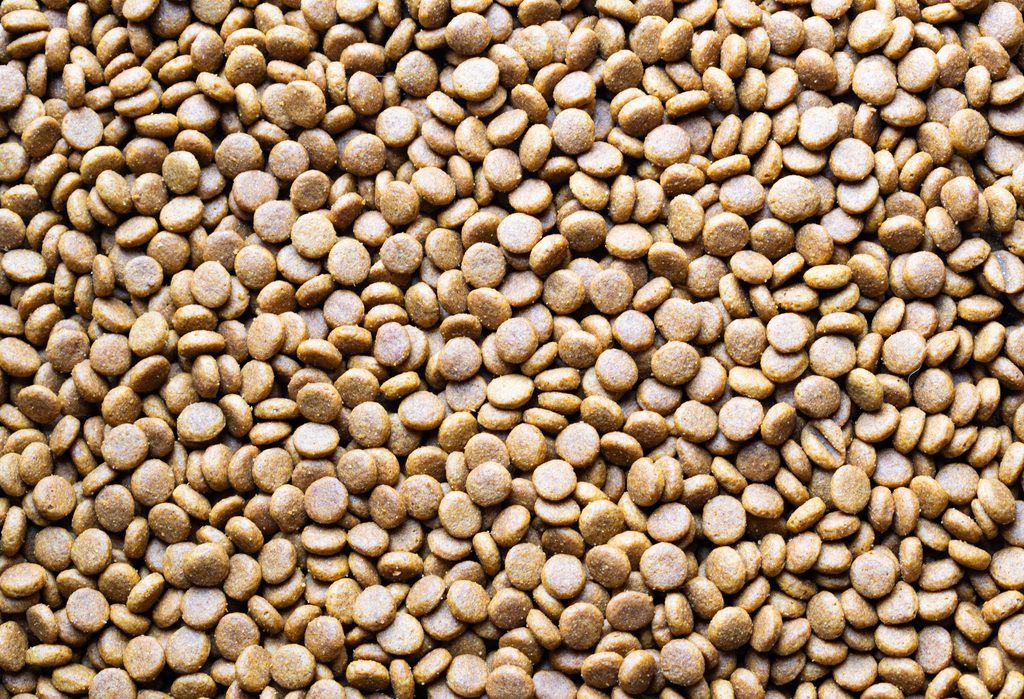
Do not judge a product by its first ingredient alone
A common mistake is choosing pet food simply because meat appears first on the ingredient list.
A nutritionally appropriate diet depends on the entire formulation.
A product containing several different ingredients may be nutritionally complete, while a product featuring an attractive meat ingredient may still be unsuitable for a particular life stage.
Look beyond the ingredient list and examine the nutritional adequacy statement and guaranteed analysis.
3. Learn How to Read the Guaranteed Analysis
The guaranteed analysis is the section that displays specified nutrient levels in the food.
On many US-style dog and cat food labels, it includes four basic guarantees:
- Crude protein.
- Crude fat.
- Crude fibre.
- Moisture.
Other nutrients may also appear depending on the product and its claims.
Crude protein
Crude protein indicates the minimum guaranteed percentage of protein in the product.
Protein supplies amino acids needed for tissue development, muscle maintenance, immune function and numerous metabolic processes.
However, a higher crude protein percentage does not automatically mean a food is better.
The protein source, amino acid balance, digestibility and suitability for the individual animal are also important.
Crude fat
Crude fat indicates the minimum guaranteed percentage of fat.
Dietary fat supplies concentrated energy and essential fatty acids. It also supports healthy skin, coat condition and the absorption of fat-soluble vitamins.
A food with a higher fat percentage may be appropriate for some active animals but less suitable for pets that need calorie restriction.
Crude fibre
Crude fibre indicates the maximum guaranteed percentage of crude fibre measured using a specified analytical method.
Fibre can support digestive function and influence stool consistency.
Different fibre sources have different properties, so crude fibre alone does not describe the complete fibre content or its physiological effects.
Moisture
Moisture indicates the maximum guaranteed percentage of water in the product.
This is particularly important when comparing dry and wet pet food.
Dry food generally contains considerably less water than canned or pouch food.
For example, imagine two hypothetical products:
| Nutrient | Dry food | Wet food |
|---|---|---|
| Protein | 26% | 10% |
| Fat | 14% | 5% |
| Fibre | 4% | 1% |
| Moisture | 10% | 78% |
It would be misleading to conclude that the dry food automatically contains better nutrition because its protein percentage is higher.
The products contain different amounts of water.
What does the word crude mean?
The word crude does not mean that the ingredient is poor quality, contaminated or unfinished.
It refers to the analytical method used to estimate a particular nutrient category.
Therefore, crude protein should not be interpreted as a description of protein quality.
Why guaranteed analysis cannot tell the whole story
Guaranteed analysis provides useful information, but it has limitations.
It does not independently establish:
- The digestibility of the food.
- The exact amino acid balance.
- The bioavailability of individual nutrients.
- Whether the product meets every essential nutrient requirement.
- Whether the food is suitable for a particular medical condition.
Use it as one part of your assessment rather than as a complete nutritional evaluation.
4. Check the Nutritional Adequacy Statement
This is one of the most important sections of a pet food label.
The nutritional adequacy statement tells you whether a product is intended to provide complete nutrition for a particular species and life stage.
Look for wording such as:
- Complete and balanced for adult maintenance.
- Formulated for growth.
- Suitable for all life stages.
- Intended for intermittent or supplemental feeding only.
What does complete and balanced mean?
A complete diet provides the essential nutrients required for the intended animal and life stage.
Balanced means those nutrients are supplied in appropriate proportions.
In the United States, AAFCO provides recognized nutrient profiles and feeding protocols used to support nutritional adequacy claims.
Two common statements include:
Formulated to meet nutritional requirements: This indicates that the food has been formulated to meet the applicable nutrient profile.
Animal feeding tests substantiate nutritional adequacy: This indicates that feeding trials conducted using the relevant procedures support the nutritional adequacy claim.
Both approaches provide useful information, but neither should be interpreted as a guarantee that every individual pet will thrive on that particular food.
Understand life-stage categories
Different life stages require different nutritional formulations.
Growth
Puppies and kittens need nutrients that support development, including appropriate energy, protein, vitamins and minerals.
Large-breed puppies may require particular attention to calcium levels and energy intake because excessive growth can contribute to skeletal problems.
Adult maintenance
Adult maintenance diets are formulated for animals that have completed growth and are not pregnant or nursing.
Their purpose is to support everyday nutritional needs and maintain appropriate body condition.
Gestation and lactation
Pregnant and nursing animals have increased nutritional demands.
Their diets must provide appropriate energy and nutrients to support both the mother and developing offspring.
All life stages
In the AAFCO framework, foods intended for all life stages must meet the requirements associated with growth and reproduction as well as maintenance.
This does not mean that one feeding quantity is appropriate for every age or activity level.
Be careful with supplementary feeding products
Some products are not designed to provide complete nutrition.
Examples include certain:
- Treats.
- Toppers.
- Meat-only products.
- Supplements.
- Complementary feeding products.
Look for statements such as:
“This product is intended for intermittent or supplemental feeding only.”
This means the product should not automatically replace a complete and balanced diet.
If a therapeutic veterinary diet carries special feeding instructions, follow the veterinarian’s directions.
5. Understand Calorie Information
Calories are important because feeding the correct quantity is essential for maintaining a healthy body weight.
Many pet owners focus on protein and fat percentages but overlook the amount of energy supplied by each serving.
A food may contain appropriate nutrients but still contribute to weight gain if too much is fed.
What does kcal mean?
Kcal means kilocalorie, a unit used to measure food energy.
Pet food calorie statements may provide information such as:
- Kilocalories per kilogram.
- Kilocalories per cup.
- Kilocalories per can.
- Kilocalories per serving.
In the United States, calorie information is included on pet food labels under applicable requirements.
Availability and labeling formats differ in other countries.
Why calorie information matters
Consider two dry foods that appear similar.
One provides 320 kcal per cup, while another provides 430 kcal per cup.
Feeding the same number of cups of both products would supply different amounts of energy.
This matters especially for:
- Indoor cats with limited activity.
- Dogs prone to weight gain.
- Neutered animals.
- Senior pets.
- Animals undergoing a veterinarian-supervised weight-management programme.
Always check the actual calorie content before comparing feeding quantities.
6. Understand Common Pet Food Marketing Claims
Pet food packaging frequently uses descriptive words to attract buyers.
Some claims provide useful information, while others have limited nutritional meaning.
Here are some common examples.
Natural
The word natural can have a specific regulatory meaning depending on the jurisdiction and applicable labeling rules.
However, it does not automatically mean that a food is nutritionally superior, safer or more digestible than other appropriately formulated foods.
Organic
Organic claims are subject to applicable certification and labeling rules.
An organic designation does not automatically establish that a food meets every nutritional requirement for your pet.
Check the nutritional adequacy statement separately.
Grain-free
Grain-free means the product does not contain conventional cereal grains.
It does not necessarily mean the food is healthier or more nutritious.
Some grain-free diets use ingredients such as peas, lentils, potatoes or other carbohydrate sources.
If your pet has no diagnosed condition requiring grain avoidance, there is generally no reason to select a grain-free diet solely because the packaging presents it as superior.
Discuss specialized diets with your veterinarian, particularly if your dog has a history of heart disease or is being considered for a diet associated with nutritional concerns.
High protein
High protein indicates that a food is marketed or formulated around a higher protein content.
However, protein requirements vary according to the animal’s age, health, activity and physiological condition.
More protein is not automatically better for every animal.
Premium and holistic
Words such as premium and holistic are commonly used in pet food marketing.
They do not independently establish nutritional adequacy or superior quality.
Instead of relying on these terms, investigate the manufacturer’s nutritional expertise, formulation practices and quality-control procedures.
Vet recommended
A veterinary recommendation can be meaningful when it is genuine and supported by relevant evidence.
However, the phrase should not replace an assessment of the actual product.
Consider whether the food is suitable for your pet’s individual needs and whether the recommendation comes from a qualified professional.
7. Read Feeding Instructions Carefully
Even a suitable food can contribute to nutritional problems when fed in inappropriate quantities.
Most complete pet foods provide feeding instructions on the packaging.
These recommendations generally take your pet’s body weight and life stage into account.
For example, a hypothetical label might recommend:
“Feed 150 grams daily to an adult dog weighing 10 kilograms.”
This is an illustrative example, not a universal feeding recommendation.
Actual requirements vary between animals.
Use your pet’s weight as a starting point
Check your pet’s current body weight and compare it with the manufacturer’s feeding table.
Do not automatically use the amount recommended for an animal that weighs more or less than yours.
If your pet is overweight, its current weight may not be the correct weight to use when calculating a weight-loss diet.
Ask your veterinarian to help establish an appropriate target weight and calorie allowance.
Divide daily food into suitable meals
Many adult dogs do well with two meals daily, although feeding frequency should be adjusted to individual needs.
Cats commonly benefit from multiple smaller meals throughout the day.
Puppies and kittens generally need more frequent feeding than healthy adult animals.
Follow the product’s instructions and discuss an appropriate schedule with your veterinarian.
Measure portions accurately
Using a measuring cup is better than estimating, but a kitchen scale is generally more accurate.
For example, two cups of different dry foods may have different weights and calorie contents.
Weighing food helps you maintain consistency, particularly when managing an animal’s weight.
Remember that treats also contain calories
Treats, table scraps and food toppers contribute to daily calorie intake.
As a general guideline, treats should account for no more than 10% of a healthy dog’s or cat’s daily calories, with the remaining calories coming from a nutritionally complete diet.
For some pets, especially those with medical conditions or weight problems, a veterinarian may recommend a lower allowance.
8. Check the Manufacturer’s Information
A trustworthy manufacturer should be able to provide useful information about its products.
Look for:
- The manufacturer’s name.
- A physical business address or other verifiable contact details.
- A customer service telephone number or email address.
- Batch or lot identification.
- Manufacturing and expiry information where applicable.
- Clear product descriptions.
- Information about nutritional formulation and quality control.
The World Small Animal Veterinary Association recommends investigating who formulates the food, the qualifications of the nutrition professionals involved, the manufacturer’s quality-control procedures and the research supporting its products.
A manufacturer should ideally be able to explain how its food is formulated and tested.
If important nutritional questions cannot be answered, consider discussing alternative products with your veterinarian.
9. Compare Dry and Wet Pet Food Correctly
Dry and wet food can both form part of a healthy feeding programme when appropriately formulated.
However, they differ in moisture content, calorie density, texture, storage requirements and feeding quantities.
Dry food
Dry food is convenient, easy to measure and generally has a longer shelf life before opening when stored properly.
It is also usually more calorie-dense by weight than wet food because it contains less water.
However, leaving dry food available throughout the day can make it difficult to monitor calorie intake in some animals.
Wet food
Wet food contains more moisture and can help increase dietary water intake.
This can be useful for cats that consume relatively little water voluntarily.
Wet food may also be easier for some animals to chew.
However, opened products require appropriate refrigeration and should be handled according to the manufacturer’s storage instructions.
Can dry and wet food be combined?
Yes, provided both products are suitable for your pet and the total daily calorie intake is controlled.
For example, you may feed a measured portion of dry food alongside a portion of complete wet food.
Avoid adding large amounts of extra food without adjusting the total daily ration.
If one product is intended only for supplementary feeding, use it accordingly.
10. Watch for Signs That a Food May Not Suit Your Pet
A food label can help you make an informed choice, but your pet’s response also matters.
Monitor:
- Body weight and body condition.
- Appetite.
- Stool consistency.
- Vomiting or diarrhoea.
- Skin condition.
- Coat quality.
- Energy levels.
Changes in these areas may have several possible causes, so they should not automatically be blamed on the food.
For example, persistent itching may result from parasites, environmental allergies, skin infections or food-related reactions.
If your pet develops persistent digestive problems, unexplained weight changes, poor appetite or other concerning symptoms, seek veterinary advice.
Do not repeatedly change diets or begin restrictive elimination diets without professional guidance.
How to change pet food safely
When changing from one food to another, a gradual transition over approximately 7–10 days is often helpful for healthy animals.
A simple approach is:
- Days 1–2: Mix approximately 25% new food with 75% old food.
- Days 3–4: Use approximately 50% of each.
- Days 5–6: Mix approximately 75% new food with 25% old food.
- Days 7–10: Complete the transition to the new food if your pet is tolerating it.
This is a general example rather than a strict schedule.
Some animals need a slower transition. Follow veterinary instructions if your pet has digestive disease, food allergies or another medical condition.
11. Special Considerations for Puppies, Kittens and Senior Pets
A food that works well for one animal may not be suitable for another.
Puppies
Puppies require a complete diet formulated for growth.
Large-breed puppies need particular attention to nutrient balance and calorie intake because rapid or excessive growth can affect skeletal development.
Check that the label identifies the food as suitable for puppy growth and, where relevant, the appropriate size category.
Kittens
Kittens need nutrient-dense food formulated for growth.
Their energy and nutrient requirements differ from those of adult cats.
Avoid relying on ordinary adult cat food as the sole diet for a growing kitten unless a veterinarian confirms its suitability.
Senior dogs and cats
Older pets may experience changes in activity, muscle mass, digestion, dental health and body condition.
However, there is no single nutritional formula that every senior pet needs.
Some older animals need calorie control, while others may need additional nutritional support to maintain muscle mass.
Pets with kidney disease, diabetes, heart disease or other medical conditions may require specialized diets.
Your veterinarian can help determine whether a regular maintenance diet or a therapeutic food is appropriate.
12. A Practical Checklist Before Buying Pet Food
Before purchasing a product, take a moment to review the following points.
- Is the product specifically intended for dogs or cats?
- Is it appropriate for my pet’s life stage?
- Does it provide complete and balanced nutrition if I intend to use it as the main diet?
- Have I checked the guaranteed analysis?
- Have I considered its calorie content?
- Are the ingredient names clearly listed?
- Have I avoided relying solely on marketing words?
- Can the manufacturer provide useful nutritional information?
- Are the feeding instructions suitable for my pet’s weight and condition?
- Does my pet have a medical condition that requires veterinary dietary advice?
Taking these steps can make pet food shopping more informed and reduce the risk of choosing an unsuitable product.
Frequently Asked Questions
1. What is the most important thing to check on a pet food label?
Start with the nutritional adequacy statement. It helps establish whether the product is intended to provide complete nutrition for your pet’s species and life stage.
Then review the ingredient list, guaranteed analysis, calorie information and feeding instructions.
2. Does the first ingredient on a pet food label determine its quality?
No. Ingredients are generally listed by weight, but the first ingredient alone cannot establish the nutritional quality of the complete diet.
Moisture content, ingredient composition, nutrient balance and digestibility also matter.
3. Is grain-free food better for dogs and cats?
Not necessarily. Grain-free food is not automatically healthier than food containing grains.
Some animals may require a specific diet for medical reasons, but grain-free products should not be selected solely because they are marketed as superior.
4. What does complete and balanced pet food mean?
It means the food is intended to supply the essential nutrients in appropriate amounts and proportions for a specified species and life stage.
In the United States, AAFCO nutrient profiles and feeding protocols provide recognized frameworks for supporting these claims.
5. Can I feed my dog or cat food labelled for all life stages?
A product labelled for all life stages under the AAFCO framework is formulated to meet the nutritional requirements associated with growth and reproduction as well as maintenance.
However, feeding quantities and suitability still depend on the individual animal.
6. How do I know whether I am feeding my pet too much?
Monitor body weight, body condition and calorie intake.
If your pet is steadily gaining excess weight, its daily food and treat intake may need adjustment.
A veterinarian can help determine an appropriate calorie target and feeding plan.
7. Are animal by-products bad for pets?
Not automatically. Animal by-products can include nutritious tissues and organs.
Their nutritional value depends on the ingredients, processing, quality control and complete formulation.
The term alone is not enough to determine whether a food is suitable.
8. Should I feed my pet wet food or dry food?
Both can be suitable when nutritionally complete and appropriate for the animal.
Wet food provides more moisture, while dry food is convenient to store and measure.
The best choice depends on your pet’s preferences, health, calorie requirements and feeding circumstances.
9. How often should I change my pet’s food?
There is no requirement to change a healthy pet’s complete diet frequently if it is suitable and well tolerated.
When a change is necessary, introduce the new food gradually unless your veterinarian recommends a different approach.
10. Can I rely on feeding instructions printed on the package?
Use them as a starting point, not an exact prescription.
Individual energy requirements vary according to age, body condition, activity, reproductive status and health.
Adjustments may be necessary with veterinary guidance.
11. Are expensive pet foods always better?
No. Price alone does not establish nutritional quality.
Look at the nutritional adequacy statement, formulation information, manufacturer expertise, quality-control practices and suitability for your pet.
12. What should I do if I cannot understand a pet food label?
Contact the manufacturer for clarification or ask your veterinarian to help interpret the information.
A qualified veterinary professional can assess the food in relation to your pet’s age, body condition, lifestyle and medical history.
Final Thoughts
Understanding pet food labels is an important part of responsible pet ownership.
The ingredient list can help you identify what goes into a product, while the guaranteed analysis provides information about specified nutrient levels. The nutritional adequacy statement helps establish whether the food is intended for your pet’s life stage, and calorie information and feeding instructions help you manage daily intake.
However, no single ingredient, marketing claim or nutrient percentage can determine whether a food is ideal for every animal.
Consider the complete nutritional profile, the manufacturer’s transparency and your pet’s individual requirements before making a decision.
If your dog or cat has a medical condition, unusual weight changes, persistent digestive problems or specific dietary requirements, consult a qualified veterinarian before selecting a specialized diet.
A little time spent understanding a pet food label can help you make more informed feeding decisions and support your companion’s long-term health and wellbeing.
Veterinary information disclaimer: This article provides general educational information and does not replace an individual veterinary examination, diagnosis or nutritional treatment plan. Always consult a qualified veterinarian when choosing a diet for a pet with a medical condition.
Reliable veterinary and regulatory sources
The following sources were consulted to verify the nutritional and labeling information. They are suitable references for the article’s source section.
1. Association of American Feed Control Officials (AAFCO)
Reading Pet Food Labels
Explains ingredient order, guaranteed analysis, nutritional adequacy, life stages, feeding instructions and calorie information.
AAFCO – Understanding Pet Food Labels
Selecting the Right Pet Food
Provides practical guidance about species, life stages and feeding recommendations.
AAFCO – Selecting the Right Pet Food
2. U.S. Food and Drug Administration (FDA)
Animal Food Labeling and Pet Food Claims
Explains animal food labeling requirements, ingredient declarations and pet food claims.
FDA – Animal Food Labeling and Pet Food Claims
Pet Food
Provides information about ingredient safety, manufacturing and regulatory oversight.
3. World Small Animal Veterinary Association (WSAVA)
Guidelines on Selecting Pet Foods
Provides veterinary guidance on nutritional adequacy, manufacturer transparency, formulation expertise, quality control and pet food selection.
WSAVA – Guidelines on Selecting Pet Foods (PDF)
Global Nutrition Guidelines
Offers additional resources on selecting appropriate diets and understanding pet nutrition.
WSAVA – Global Nutrition Guidelines
4. Your website’s editorial policy
PetCareGuide Editorial & Content Policy
This provides the editorial framework for veterinary research, responsible health information, professional transparency and corrections.
PetCareGuide – Editorial and Content Policy
Suggested citation placement
For the best reader experience, add contextual source links inside the article:
| Article section | Recommended reference |
|---|---|
| Ingredient list | FDA and AAFCO |
| Guaranteed analysis | AAFCO |
| Nutritional adequacy | AAFCO and WSAVA |
| Marketing claims | WSAVA |
| Feeding instructions | AAFCO |
| Manufacturer quality control | WSAVA |
| Regulatory considerations | FDA |
Avoid placing all references only at the bottom. Linking authoritative references beside relevant explanations makes verification easier.
Reviewed by Dr. Job Mamman
Leave a Reply